
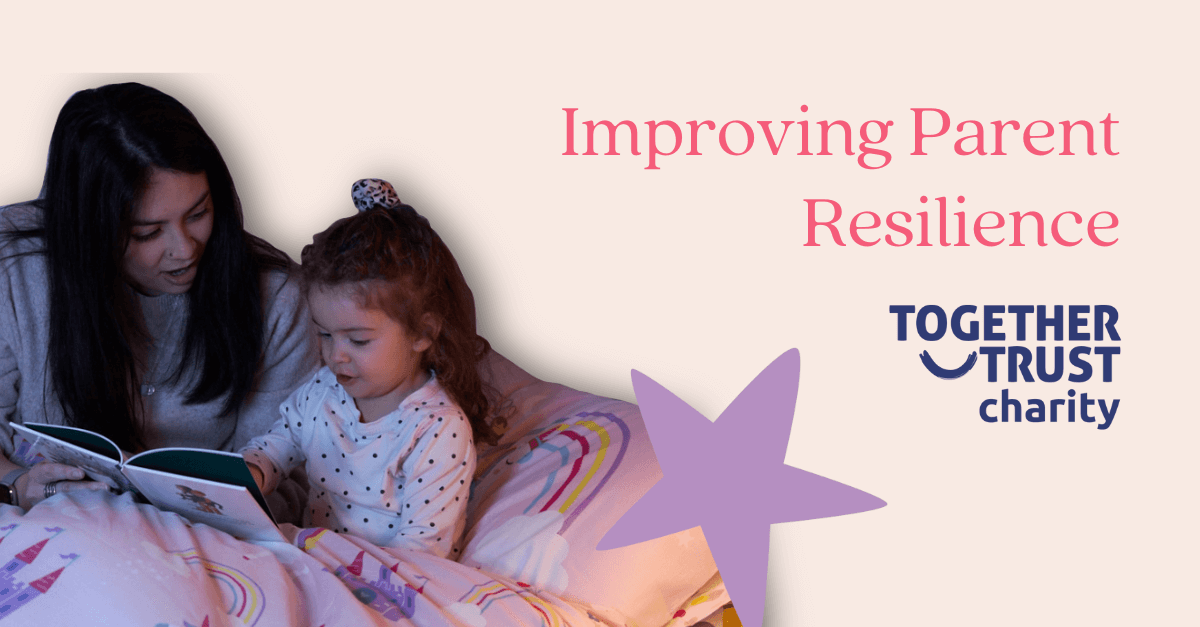
Blog provided by Together Trust. Together Trust champions for the rights and needs of care-experienced children and people with disabilities, autism and mental health differences.
Sleep struggles are one of the most common and exhausting parts of parenting. Whether it’s bedtime resistance, night waking, nightmares or sleep disorders, these challenges can leave parents feeling drained, frustrated and even helpless.
However, resilience isn’t all about having the answers, it’s actually about finding strength in the journey. In this blog, we will explore how parents can build emotional resilience while supporting their child’s sleep and why self-care and connection are just as important as sleep routines.
Sleep deprivation affects more than just energy levels. It can impact mood, patience, decision making and relationships. Parents often report feeling:
- Guilty for not being able to “fix” the problem
- Isolated or judged by others
- Anxious about their child’s wellbeing
- Overwhelmed by conflicting advice
Being able to recognise these feelings is the first steps toward resilience. You are not alone and you are definitely not failing.
What is parent resilience?
This is the ability to adapt and recover from stress, especially in the face of ongoing challenges. It is not about being perfect, it’s about being present, persistent and compassionate with yourself and your child.
Resilient parents tend to:
- Seek support when needed
- Practice self-compassion
- Stay flexible with routines and expectations
- Focus on progress, not perfection
Strategies to build resilience
Here are some practical ways to nurture your own resilience whilst helping your child to sleep better:
- Create a support network: Talk to friends and family or professionals who understand. Sharing your experience can lighten the emotional load and offer new perspectives
- Set realistic expectations: Sleep development is not linear. Regression, illness or life changes can disrupt even the best routines. Be kind to yourself when things don’t go to plan.
- Practice mindful moments: Even short pauses like deep breathing, stretching or stepping outside can help reset your nervous system and improve your coping capacity.
- Celebrate small wins: Did your child fall asleep 10 minutes earlier? Did you stay calm during a meltdown? These are victories worth acknowledging.
- Prioritise your own rest: It’s not selfish – it’s survival. Nap when you can, delegate tasks and let go of non-essentials when sleep is scarce.
Connecting with your child through sleep challenges
Sleep issues can be the opportunity to deepen your bond. Comforting a child through a nightmare or staying close during a restless night builds trust and emotional security.
Try saying:
- I’m here with you, you’re safe
- It’s okay to feel upset, we will get through this together
- Let’s work this out as a team
These moments of connection can be powerful even if you are both tired.
Final thoughts
Parenting through sleep challenges is tough but it is also a testament to your love, patience and resilience. Every sleepless night, every tearful bedtime, every moment of doubt is part of the bigger story – one where you are showing up, learning and growing.


