
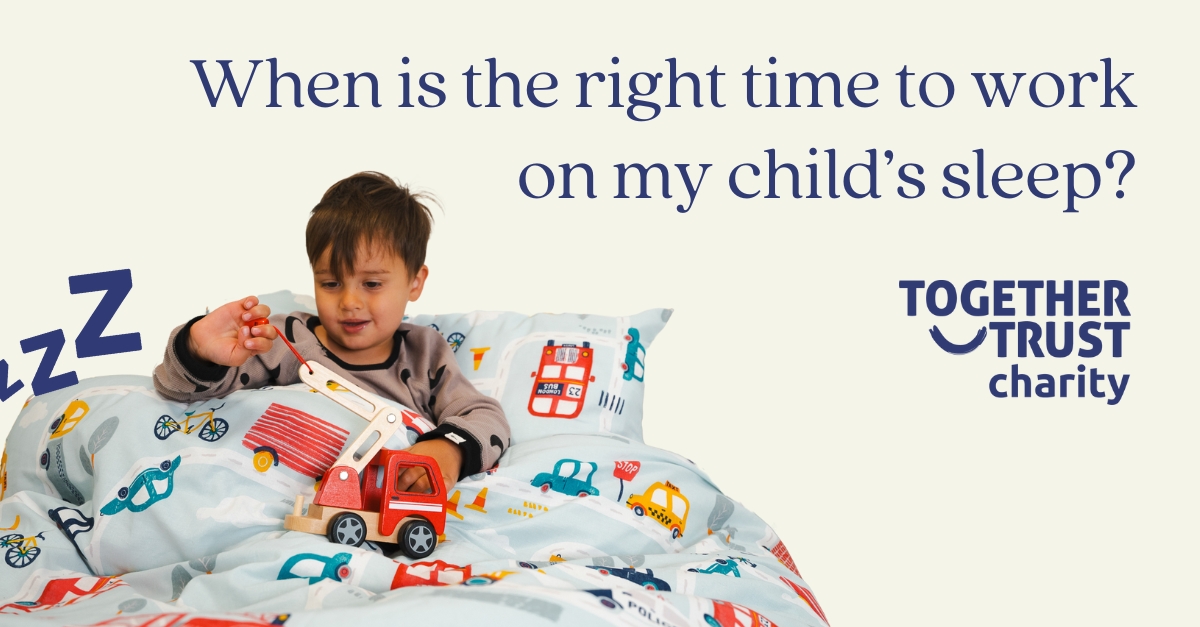
Blog provided by Together Trust. Together Trust champions for the rights and needs of care-experienced children and people with disabilities, autism and mental health differences.
As a professional sleep practitioner based in the UK, I am often asked by parents, “When is the right time to start working on sleeping skills with my child?” It’s a question that reflects the concerns and uncertainties many parents face when it comes to their child’s sleep habits. In this blog post, we aim to provide clarity and guidance on this important topic.
First and foremost, it’s crucial to recognize the critical role that sleep plays in a child’s overall health and well-being. Quality sleep is essential for physical growth, cognitive development, emotional regulation, and immune function. Establishing healthy sleep habits early in life sets the foundation for a lifetime of restful sleep and optimal functioning.
What we do know is that early intervention is key! Research has shown that addressing sleep difficulties early on can lead to significant improvements in a child’s sleep quality and overall well-being. By intervening proactively, parents can prevent the escalation of sleep problems and mitigate the impact on the child’s development and functioning. However, this does NOT mean it is too late to reach out for support. At any age, you can successfully make steps towards improving sleeping skills to finally get some much needed z’s.
While every child is beautifully unique, there are certain signs that may indicate it’s time to seek support from a professional sleep practitioner:
- If your child consistently experiences difficulties falling asleep, staying asleep, or waking up frequently during the night, it may be a sign that they need additional support. In life, we all go through phases of disturbed sleep, which for children could include things like stress at school, growth spurts, transitions in education etc. However, if this is ongoing and persistent then it is likely something that may need just a little bit of support or intervention.
- If sleep disturbances are significantly impacting your child’s mood, behaviour, or ability to participate in daily activities, it’s essential to address these concerns promptly. Lack of sleep can have a huge knock on effect on our daily lives and when this is happening, it’s time to reach out!
- If parents or carers are experiencing significant sleep deprivation or exhaustion due to their child’s sleep challenges, seeking support can be beneficial for the entire family, not only the young person. We often hear that it is not just the young person with the sleeping difficulty that has disturbances in their everyday life, the whole family can feel the effects also.

Some Factors to Consider:
When determining the right time to start working on sleeping skills with your child, it’s essential to consider various factors, including:
- Individual Needs: Every child is unique, and their sleep needs and preferences may differ. It’s essential to tailor interventions to suit the child’s individual needs and circumstances. You may feel as a family that a certain time is going to be a better time to work on sleep, or that a particular time may not be suitable e.g. just before moving house, during school holidays, after a transition to a new school or new year group etc. There is no right or wrong, it is whatever you feel, as a family, is going to be the best choice.
- Family Dynamics: Considerations such as family routines, dynamics, and support systems can also influence the approach to addressing sleep challenges.
In conclusion, there is no one-size-fits-all answer to the question of when to start working on sleeping skills with a child. However, early intervention, proactive support, and a collaborative approach are key components of successful sleep management. By addressing sleep challenges early and seeking support from knowledgeable professionals, parents and carers can help their child achieve restful nights and thrive in their daily lives.
Remember, you’re not alone on this journey. With the right support and guidance, better sleep is within reach for your child and your family.


